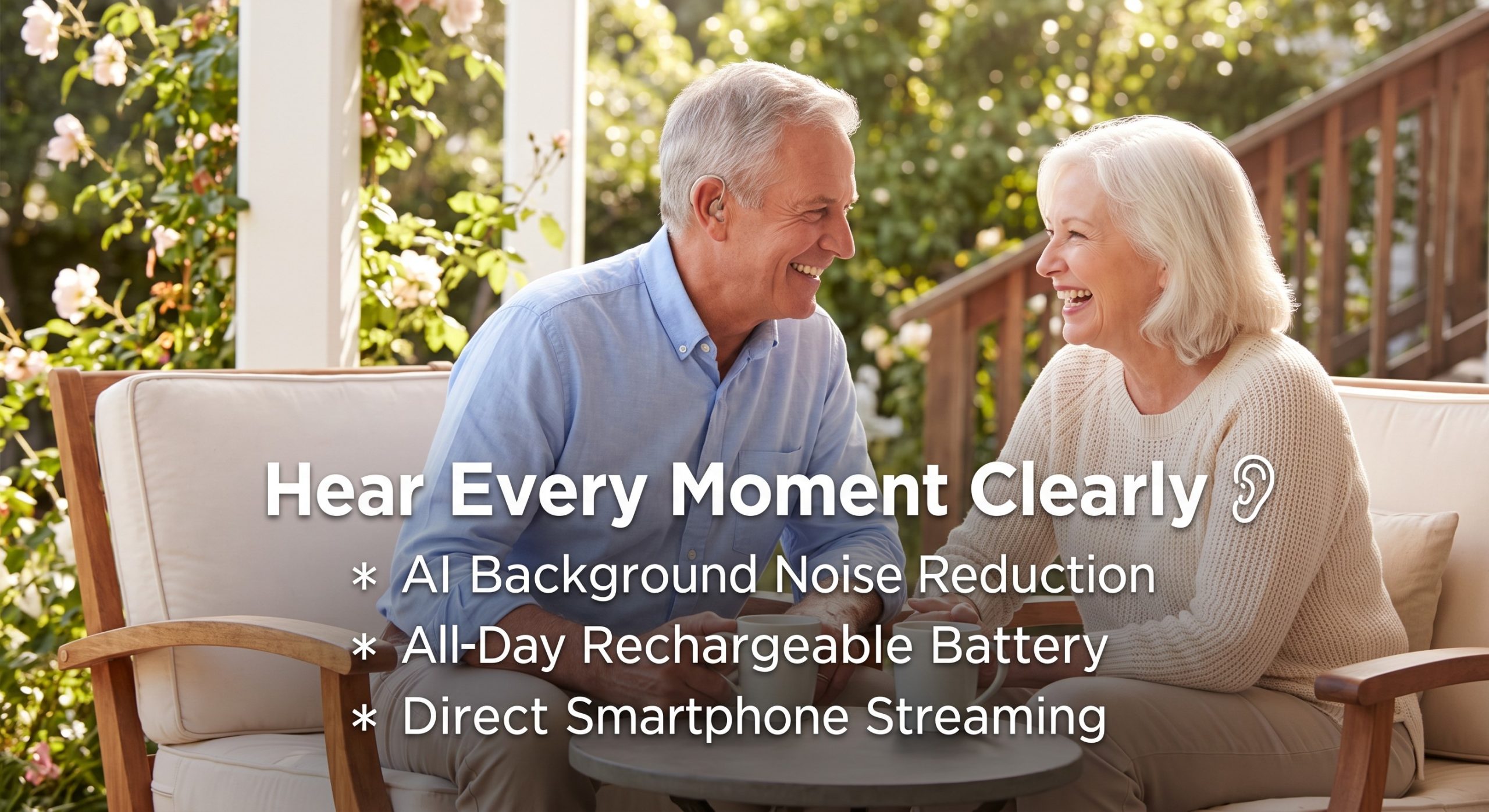
Hearing loss often develops gradually, making family dinners, phone calls, or TV dialogue harder to follow over time. Modern hearing technology has advanced rapidly, offering lightweight, comfortable, and discreet options that restore clear sound without hassle.
Key Features in Today’s Hearing Aids
- AI Speech Enhancement: Onboard microprocessors filter out background noise in busy environments like restaurants, isolating human voices for clear conversation.
- Over-the-Counter (OTC) Accessibility: For mild-to-moderate hearing loss, OTC models offer quality sound processing at lower costs without requiring a prescription or clinical fitting.
- All-Day Rechargeability: Simple overnight charging docks eliminate tiny disposable batteries while delivering up to 20+ hours of continuous power.
- Bluetooth Audio Streaming: Connect directly to smartphones or televisions to stream phone calls, music, and entertainment straight into your ears.
- Automatic Environment Adaptation: Smart sensors adjust volume and directional microphones seamlessly as you move between quiet rooms and crowded outdoors.
Investing in hearing health protects cognitive function, prevents social isolation, and makes everyday moments effortless again.
Top-rated hearing aids span both prescription devices fitted by audiologists and direct-to-consumer over-the-counter (OTC) options designed for mild-to-moderate hearing loss.
Top Prescription Hearing Aids
- Phonak Audéo Sphere Infinio: Highest-rated model for speech clarity in noisy environments. Uses a dedicated AI chip (DEEPSONIC) to separate speech from background chatter in real time, featuring universal Bluetooth streaming and all-day rechargeable power.
- Oticon Intent: Best for active social settings. Uses 4D user-intent sensors that monitor your head movements and environment to deliver a complete, natural 360-degree soundscape without isolating you from your surroundings.
- Widex Allure: Recommended for music lovers and precise audio fidelity. Features ultra-fast processing designed to eliminate the standard digital echo, resulting in a clean, true-to-life sound profile.
Top Over-the-Counter (OTC) Hearing Aids
- Jabra Enhance Select 700: Top overall OTC option. Combines a tiny, discreet design with Bluetooth LE Audio, Auracast streaming, and access to professional remote audiologist care.
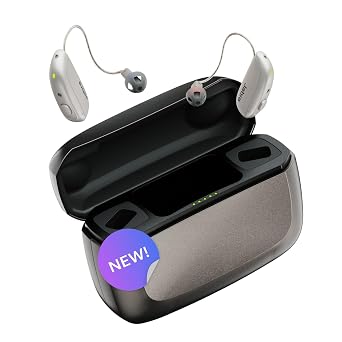
- JVC OTC Hearing Aids for Seniors: AI Self‑Fitting with Tuned App, Rechargeable 84‑Hour Battery with Charging Case, Bluetooth Calls & Music, FDA‑Cleared, Comfortable Design

- Elehear Beyond Pro: Best value OTC choice featuring onboard AI noise cancellation, high-frequency sound amplification, and dedicated tinnitus masking modes.

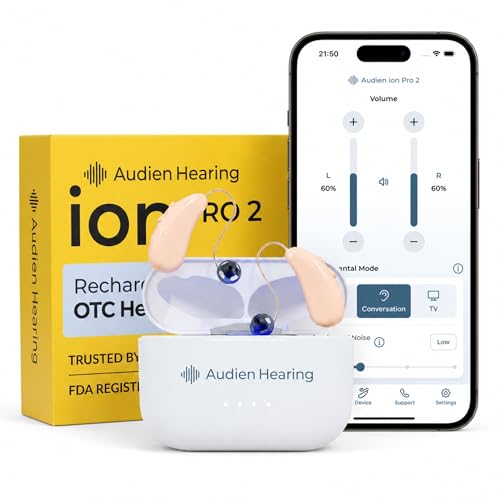
Audien ION Pro 2: Budget-friendly receiver-in-canal device providing six preset environment modes, rechargeable batteries, and basic Bluetooth streaming.
Pros
- Today’s devices are smaller, lighter, and easier to charge than older hearing aids
- OTC models can help some people with mild to moderate hearing loss without a clinic visit
- Bluetooth can send phone calls and TV sound straight to the ears
- Rechargeable models avoid tiny batteries that are hard to handle
- Better hearing can make conversations and family time less tiring
Cons
- OTC aids are not for everyone, especially if hearing loss is more than mild to moderate
- Apps, pairing, and charging docks add extra steps
- Cheap amplifiers are not the same as hearing aids
- A poor fit can whistle, hurt, or sound tinny
- These products do not replace a hearing test or medical advice
Who each type is for
- Want help from a hearing clinic and a custom fit: look at prescription brands such as Phonak, Oticon, or Widex with an audiologist
- Want an OTC starting point with extra support: Jabra Enhance Select 700
- Want a lower-cost rechargeable OTC option: JVC, Elehear Beyond Pro, or Audien ION Pro 2
My recommendation
Start with a hearing check, not a shopping cart. If a doctor or audiologist says you have mild to moderate hearing loss, an OTC aid may be worth trying. If family members have to repeat themselves a lot, or you turn the TV up high, get tested.
I would not buy the cheapest “amplifier” just because the price looks good. If you do try an OTC model, use the return window and give yourself a few quiet days to adjust.
This page is for general information. It is not hearing care.
Leave a Reply